The Problem
Millions of older adults needs face fragmented interfaces, unclear navigation, and devices that assume prior digital literacy. As essential services move online, the gap between those who can participate and those who are excluded keeps widening.
The reality of effective digital inclusion
- Complex menus exclude users with motor or vision differences.
- Support often requires a “tech-savvy” family member.
- Products optimize for power users, not for patience language.
- Fear of “breaking something” leads many to disengage.
Product

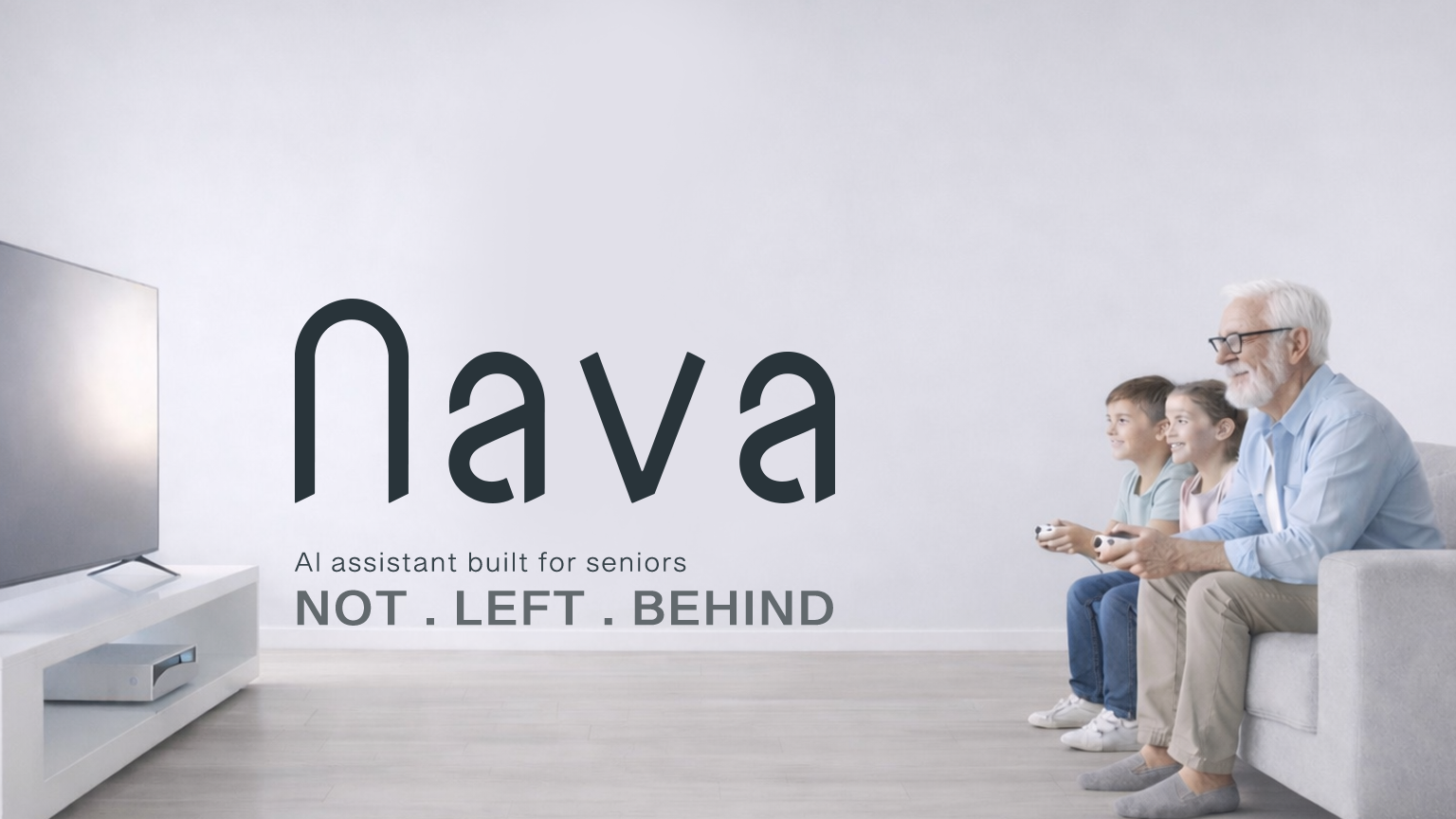
Nava is a solution for accessibility challenges across communication, information, and entertainment. Easily connect with loved ones, get answers in plain language, and complete everyday tasks—with a voice-first experience designed for confidence, not confusion.
Persona
Ashley Miller
(42 years old)
“I am just too busy to help my mom as much as would like to.”

Location
Los Angeles, Ca
Occupation
Hospital Administrator
Education
Bachelors in Finance
Income
$120k / year
Personality Traits
Busy, caring, organized, digitally capable
Preferred Devices
Smartphone, tablet, laptop
Most-Used Services
Text, FaceTime, email, Amazon, patient portals
Digital Behavior
- Tries to solve issues herself
- Helps her mom remotely by phone
- Searchs quick video tutorials when stuck
Goals
- Helps her mom stay independent
- Reduces repeat tech-support calls
- Believes her mom can handle daily tasks
challenges
- Limited time and attention
- Mom gets stuck on multi-step daily tasks
- Existing tools are too generic or confusing
Brand Values
- Trust,simplicity,reliability,family visibility
Market Analysis
The market for inclusive consumer technology is expanding as populations age and regulations emphasize accessible design. Organizations that pair simple interaction models with trustworthy assistance can capture both direct-to-consumer and partnership channels.
$12.4B
Estimated reachable serviceable market for assistive & inclusive UX (illustrative).
Nava targets households where clarity and human tone matter more than feature depth—starting with communication, guidance, and media, then expanding through integrations.
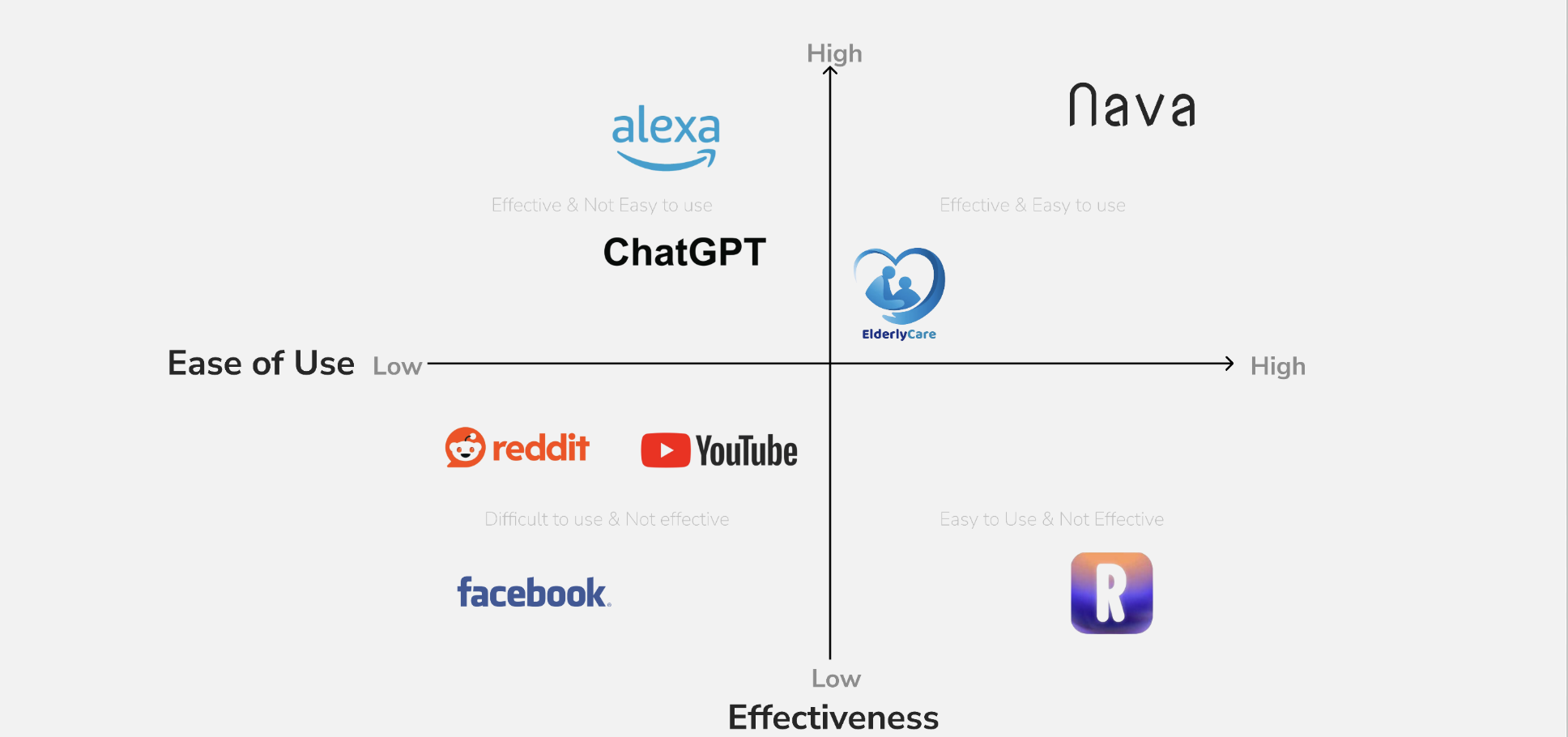
Competitive Landscape
Pro Forma
| Financial Category (USD $1k) | Year 1 (2025) | Year 2 (2026) | Year 3 (2027) |
|---|---|---|---|
| Total Active Users (Year-End) | 10,690 | 49,391 | 228,210 |
| I. Subscription Revenue (B2C) | $352 | $2,168 | $13,345 |
| II. Gov/B2B Licensing (API) | $50 | $450 | $2,500 |
| Total Revenue | $402 | $2,618 | $15,845 |
| COGS (AI, Cloud, Support) | -$161 | -$1,047 | -$6,338 |
| AI / Inference Costs (30%) | -$121 | -$785 | -$4,754 |
| Cloud / Hosting Costs (10%) | -$40 | -$262 | -$1,584 |
| Gross Profit | $241 | $1,571 | $9,507 |
| SG&A (Operating Expenses) | -$445 | -$1,710 | -$4,600 |
| Payroll (Team & Support) | -$280 | -$1,000 | -$3,100 |
| B2G Sales & Compliance | -$45 | -$170 | -$400 |
| Marketing (B2C CAC) | -$120 | -$540 | -$1,100 |
| EBITDA | -$204 | -$139 | $4,907 |